
Game Room Flooring: Best Options for a Rec Room
The best game room flooring compared: carpet tile, LVP, rubber, foam and epoxy, rated for basements, point load under a pool table, comfort and cost.
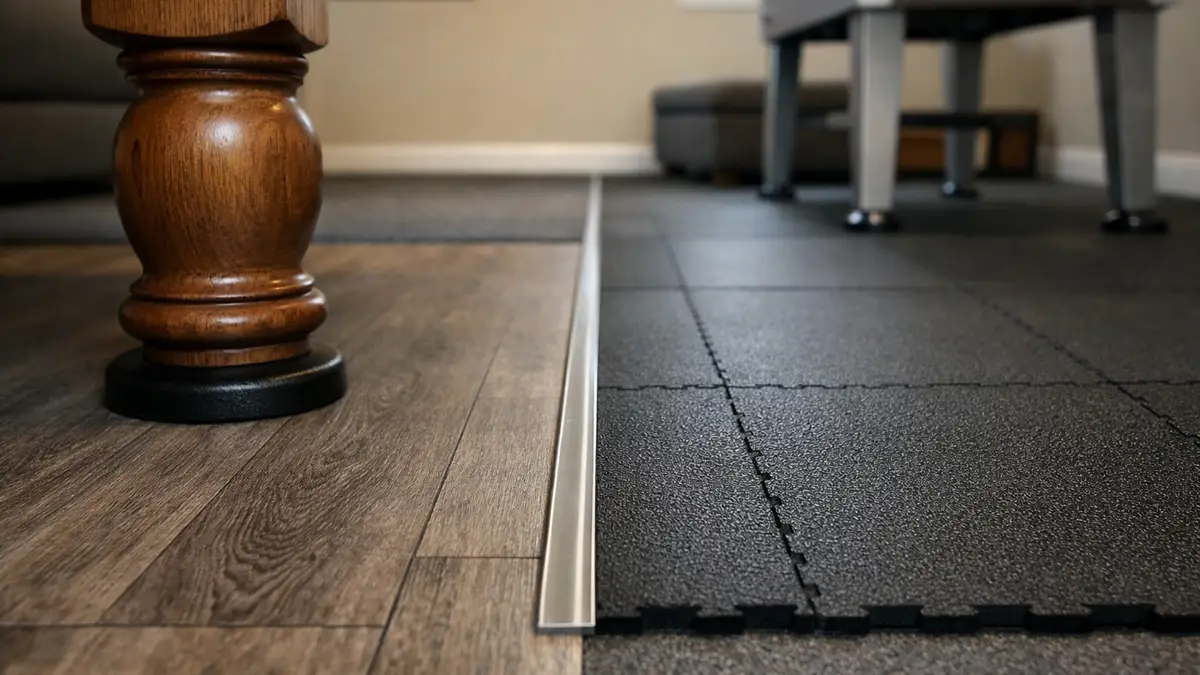
Game room flooring has to do two jobs that pull in opposite directions: give a pool table a firm, level base, and stay comfortable to stand on for a night of foosball or darts. This page rates each option on those jobs plus basement moisture and sound, so you can match the floor to the room.
What is the best flooring for a game room?
For most rooms, luxury vinyl plank (LVP) or carpet tile is the best all-round choice. Both are firm enough to support a pool table, comfortable enough for standing games, and easy to replace in sections if a weight or a drink does damage. The right pick depends on whether the room is below grade and how heavy the tables are.
| Flooring | Point load under heavy table | Basement OK | Standing comfort | Sound control | Rough cost per sq ft |
|---|---|---|---|---|---|
| Carpet tile | Good | Yes | Good | Good | $2 to $5 |
| Luxury vinyl plank | Good | Yes | Fair | Fair | $2 to $6 |
| Rubber tile | Very good | Yes | Very good | Very good | $3 to $8 |
| Foam tile | Poor | Yes | Very good | Good | $1 to $3 |
| Epoxy / sealed concrete | Excellent | Yes | Poor | Poor | $3 to $12 |
| Engineered wood | Good | With care | Fair | Fair | $4 to $9 |
| Solid hardwood | Good | No | Fair | Fair | $6 to $15 |
Costs are rough October 2026 material ranges and exclude installation. Notice that no single floor wins every column, which is why the choice follows the room: a dry main-floor room can take hardwood, a damp basement cannot.
What flooring goes under a pool table?
A firm, level floor. A slate pool table is leveled on top of the floor with shims under the feet, so the floor does not need to be dead flat, but it must not compress. Carpet, LVP, engineered wood, tile and sealed concrete all work.
What fails is soft padding. A slate table weighs 700 to 1,000 lb concentrated on small feet, and over months that load sinks into thick carpet padding or foam tiles, pulling the table out of level. If the room has plush carpet, many installers level the table and then re-check it after a few weeks as the padding settles. Our pool table buying guide covers leveling, and the how to move a pool table guide covers re-leveling after a move.
Can you build a game room in a basement?
Yes, if the flooring tolerates moisture. Below-grade slabs give off humidity even when they feel dry, and that is what cups solid hardwood and swells standard laminate. Choose a floor that shrugs off damp:
- Luxury vinyl plank: waterproof core, clicks over a slab, warm underfoot with an underlayment.
- Carpet tile: replaceable squares, forgiving of a damp patch in one area.
- Rubber tile: waterproof, grippy, the best sound control of the group.
- Sealed concrete or epoxy: the slab itself, finished; hard but immune to moisture.
A moisture test on the slab first saves a ruined floor later: tape a square of plastic to the concrete for a day or two and check for condensation underneath before laying anything organic.
Which floor is most comfortable for standing games?
Rubber tile and foam tile are the most comfortable to stand on, which matters for foosball, darts and air hockey where players are on their feet for hours. Carpet tile is the next most forgiving. LVP and tile are firmer and tire the legs faster on a long night.
The trade-off is that the softest floors are the worst under a heavy table. Foam tiles in particular dent under a slate table’s feet and should be kept to the standing-game side of the room, not under the pool table. In a mixed room, some owners run a firm floor under the pool table and a rubber or foam zone where people stand to play foosball, which the foosball table dimensions guide shows needs its own floor pocket anyway.
How does flooring affect sound?
Hard floors such as epoxy, tile and LVP bounce sound, and a game room is loud: balls drop, pucks slam, music plays. Soft floors absorb it. If the room sits under bedrooms or shares a wall with living space, carpet tile or rubber tile cuts the noise that travels, while a bare slab or epoxy sends it everywhere.
An area rug under a seating zone is a cheap way to tame echo on an otherwise hard floor. For a dedicated media-and-games room, rubber tile plus soft wall treatment makes the biggest difference to how the room sounds during play.
Does the subfloor need leveling first?
The subfloor should be reasonably level before any finished floor goes down, because a slate pool table is leveled on top of the finished floor with shims, and a badly sloped slab eats up the shim range. A slope of more than about a quarter inch over a few feet is worth correcting with a self-leveling compound on concrete or shims and plywood on a wood subfloor.
The order matters: level the subfloor, lay the floor, then position and level the table. Leveling a slate table is a multi-point job across three slate sections, and starting from a floor that already slopes means the installer fights the room instead of just truing the slate. Our how to move a pool table guide covers the re-leveling that follows any move, which is the moment a poor floor shows itself.
How do you protect the floor and the tables from each other?
Protection runs both ways: the floor can mark the table’s level, and the tables can mark the floor. Under heavy tables, a firm floor and a small load-spreading pad under each foot stop a slate table or a solid foosball cabinet from denting soft vinyl or foam over months of sitting. Air hockey tables need the same care: the tables in our best air hockey tables guide weigh 215 lb to 485 lb where the maker lists a weight.
On the play side, a few cheap measures save a floor:
- A dart mat under the throw line catches dropped steel-tip darts that would otherwise chip a hard floor.
- Felt or rubber pads under bar stools and chairs stop scratches on LVP and wood.
- An area rug in the walking lane between tables absorbs dropped balls and cuts noise.
Match these to the floor you chose: a plush carpet needs less dropped-object protection but more attention to table leveling, while a hard LVP or tile floor needs the mats and pads but holds a table dead level. Plan where each table and its standing zone sit using the game room planner so the protection goes where the wear actually happens.
Who each floor is not for
Solid hardwood is not for basements or for anyone who wants a worry-free floor under drinks and dropped weights. Foam tiles are not for the area under a pool table or a heavy foosball cabinet, where they dent and throw the table out of level. Epoxy and bare concrete are not for a room where people stand for hours without a mat, because the hardness tires legs and is unforgiving on dropped equipment. Match the floor to how the room is used, size the layout in the game room planner, and the floor will outlast the first set of tables.
Where do these ratings come from?
- Point load, moisture tolerance and comfort by flooring type: general flooring-industry guidance and manufacturer specifications, read October 2026, applied to game room loads.
- Pool table weight and leveling: our pool table buying guide and how to move a pool table guide.
- Cost ranges: typical October 2026 retail material prices, excluding installation.
Frequently asked questions
Quick answers to what readers ask us most
What is the best flooring for a game room?
For most rooms, luxury vinyl plank or carpet tile: both are firm enough for a pool table, comfortable to stand on, and easy to replace in sections. Rubber tile is best where sound and grip matter most. The right choice depends on whether the room is a basement and whether it holds a heavy table.
What flooring goes under a pool table?
A firm, level floor. Carpet, luxury vinyl plank, engineered wood, tile and sealed concrete all work, because a slate table is leveled on top of them with shims. Avoid thick, soft padding under the feet, which lets a 700 to 1,000 lb table settle unevenly over time.
Can you put a game room in a basement?
Yes, but choose moisture-tolerant flooring. Luxury vinyl plank, carpet tile, rubber and sealed concrete handle below-grade humidity. Solid hardwood and standard laminate can cup or swell on a damp slab, so they are poor basement choices without a serious moisture barrier.
Does game room flooring need to be level?
The subfloor should be as level as possible, but a slate pool table is leveled with shims on top of whatever floor you have. A badly out-of-level slab makes leveling harder and can leave a table on the edge of its shim range, so fix major slope before the table arrives.